
Trang An history begins with people and a changing landscape
Trang An history is much older than the temples encountered on a boat trip. Archaeological evidence from caves records more than 30000 years of human use, including adaptation to repeated incursions of the sea. The cultural story and the natural setting belong together: limestone formations and waterways form the landscape in which people lived and responded to environmental change. That relationship is central to understanding the heritage site.
A modern visit offers a view of this setting from the water, with religious stops along selected routes. It helps to distinguish three things as you travel: archaeological evidence, traditions associated with a shrine, and the buildings visible today. A story about a dynasty explains an association; it does not date every roof or wall. For the practical route choices, use the boat tour guide.
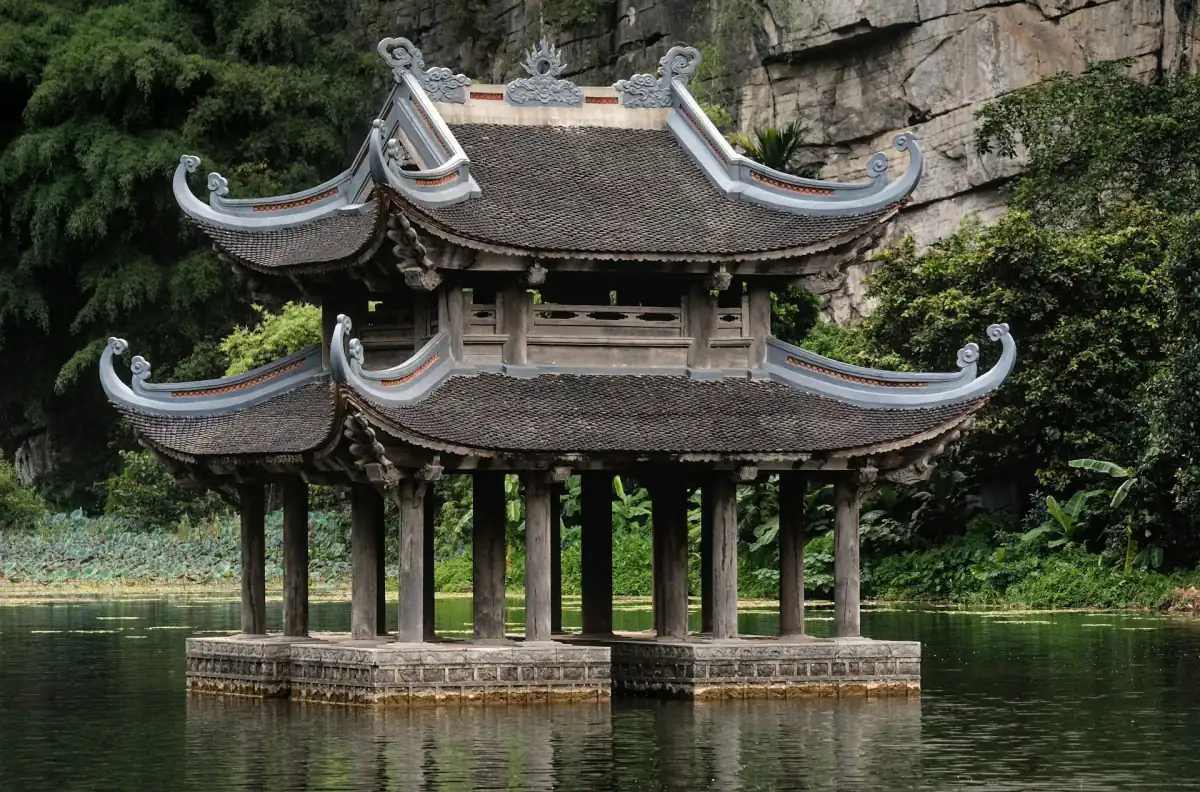
Mixed UNESCO heritage since 2014
The Trang An Landscape Complex became a mixed cultural and natural World Heritage site in 2014, under criteria (v), (vii) and (viii). UNESCO lists a property of 6226 hectares and a buffer zone of 6026 hectares. Its description brings together human adaptation, landscape beauty and geological significance. These dimensions explain why the designation covers more than an attractive boating destination.
The complex contains three protected areas: the ancient capital of Hoa Lu, the Trang An, Tam Coc and Bich Dong landscape, and the Hoa Lu special-use forest. The paid boating area is one part of this wider complex. Bai Dinh is described within the buffer zone. For a visit focused on its buildings, see the Bai Dinh Pagoda guide; its old pagoda and modern monumental complex have different histories.
Our pick: guided visit
This guided outing combines sightseeing and a Trang An boat trip.
Hand-picked tours, booked through Viator. Prices are indicative starting prices in US dollars (as of October 2026). Tap a tour for live availability and the current price in your currency.
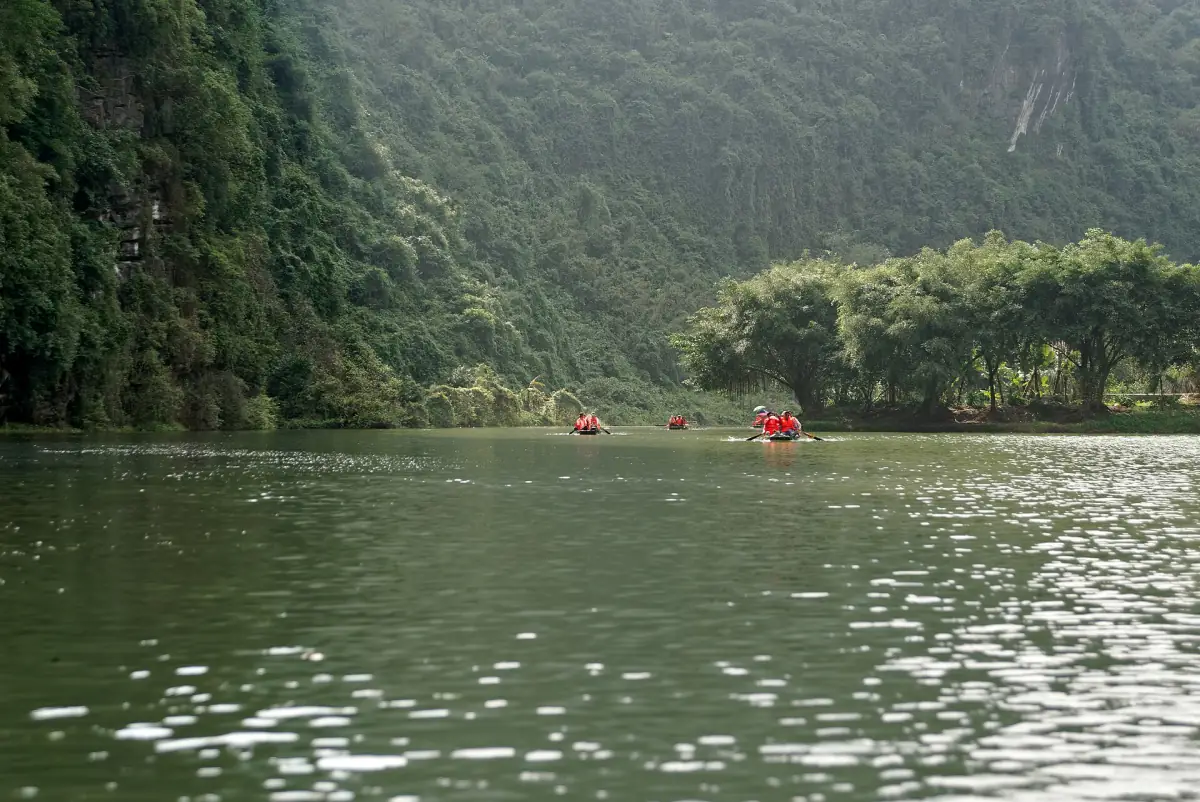
A guided day including the Trang An landscape
The day trip includes Trang An admission, a boat tour, an English-speaking guide, cycling and a Vietnamese lunch, alongside neighbouring sightseeing stops.
Temples encountered along the boat routes
The tourism centre's route description dated 27 March 2025 associates Đền Trình with the Đinh dynasty and Hành cung Vũ Lâm with the Trần dynasty. These are useful reference points when looking at the cultural landscape. They connect stops on the water journey with the region's historical memory, while the present buildings remain part of the visit you actually see.
Đền Trần and Đền Nội Lâm are names used for the same shrine, associated with the festival of Quý Minh Đại Vương. Traditions about sacred figures belong to the religious meaning of the place. Read them as traditions rather than archaeological biographies. In the route descriptions, different journeys connect different shrines and caves, so a boat itinerary also shapes which part of this story you encounter.
Hoa Lu and the ancient capital
Hoa Lu was a capital area in the tenth and eleventh centuries and forms part of the wider World Heritage complex. Its historical setting has its own guide at Hoa Lu ancient capital. Keep that land visit distinct from the Trang An boat circuit.
Protection and the limits of a visitor route
UNESCO's management framework calls for control of tourism and infrastructure and protection of archaeological sites. For a visitor, the practical approach is to stay with the designated visit, wear the life jacket, follow the rower's instructions and avoid leaving rubbish. Archaeological caves and the caves encountered along a visitor boat route serve different purposes within the protected landscape.
At religious stops, cover shoulders and knees and follow local instructions about shoes and headwear. Plan travel with the arrival guide, then check the current operating routes before visiting. A historical route description helps explain the landscape, while the day's water conditions determine the available journey.
Kong: Skull Island as a chapter in visitor history
A reconstructed visitor village associated with Kong: Skull Island opened in April 2017. A report dated 20 September 2019 announced its dismantling and removal from the route programme. Treat the film connection as historical context when looking at older photographs or accounts. Build today's visit around the landscape, caves and religious stops instead of a film-village attraction.
Questions about the landscape's past
Why is Trang An both cultural and natural heritage?
The World Heritage inscription combines evidence of long human use and adaptation with landscape and geological value. It has held mixed status since 2014.
Does the guided day trip focus on archaeological research?
It is a sightseeing day with a boat tour, an English-speaking guide, cycling, admissions and lunch. Choose it for an organised introduction to the landscape and neighbouring stops.
Are the temples all the same age?
They have different historical associations. Đền Trình is linked with the Đinh dynasty and Hành cung Vũ Lâm with the Trần dynasty; those links do not date every visible building.